How to Sell News Videos and Footage to Media Outlets
 5wh LLC
- 27 Nov, 2026
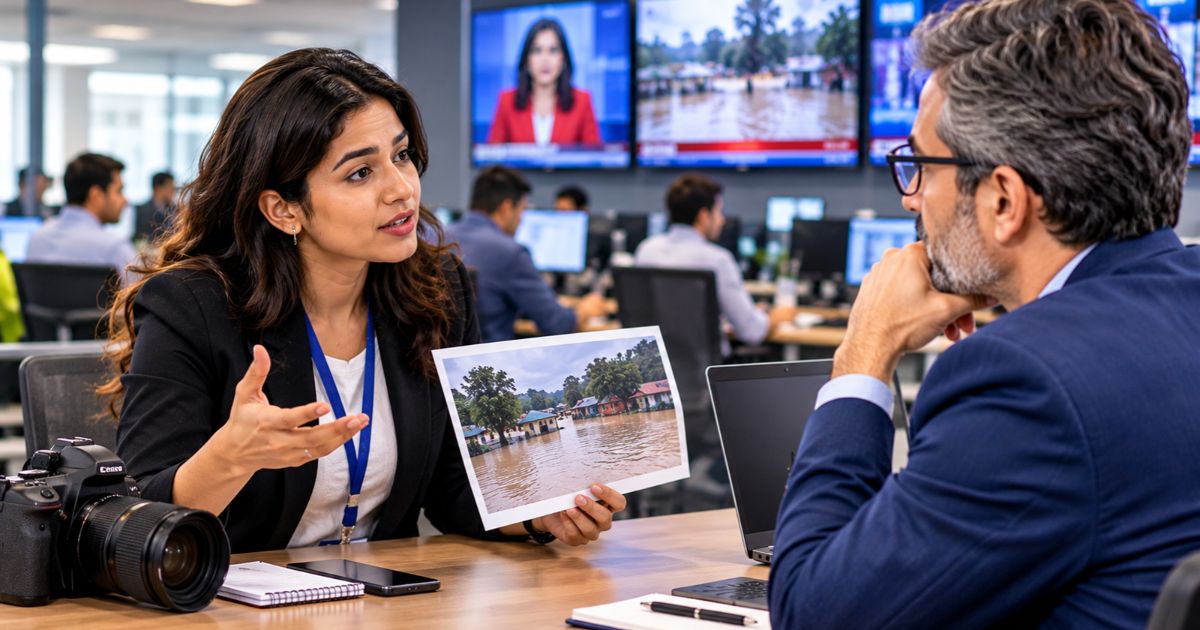
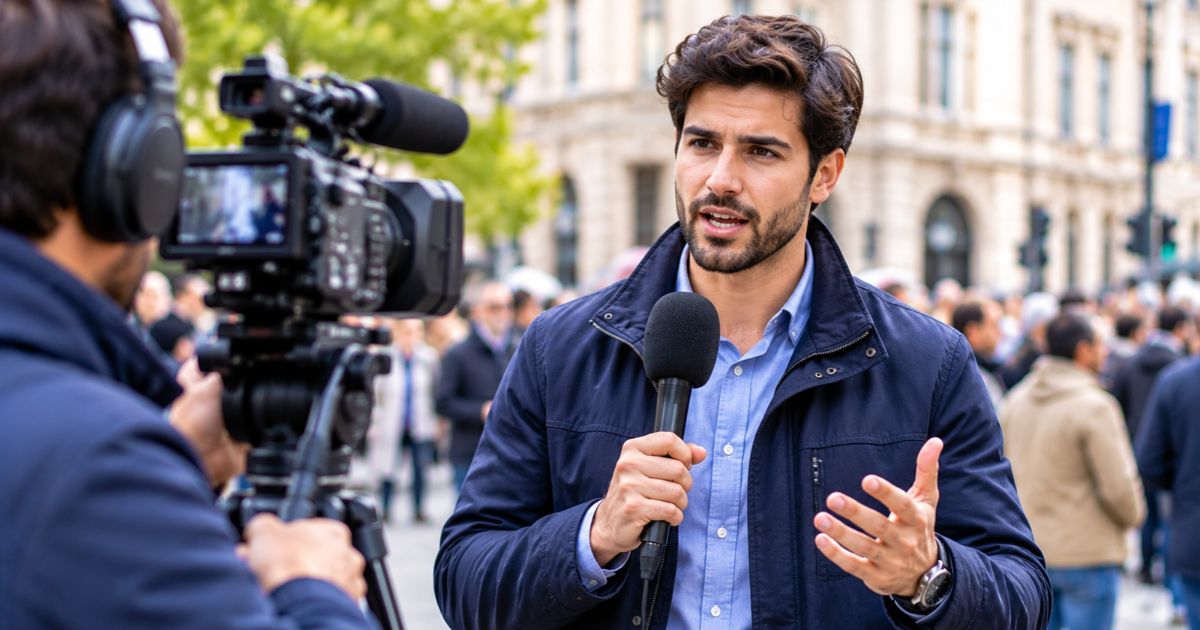
A major road accident, an unexpected political development, a natural disaster, a public demonstration, or a community event can become an important news story within minutes. Sometimes, the first person to capture the incident on camera is not a professional television reporter but an independent journalist, local videographer, or ordinary eyewitness.
News organisations regularly need authentic footage from locations where their own reporting teams may not be present. This creates an opportunity for freelance videographers and independent journalists to earn money by licensing their original recordings to television channels, digital publishers, newspapers, and international news agencies.
But capturing an interesting moment is only one part of the process. Media organisations must establish whether a video is genuine, confirm who recorded it, understand the circumstances in which it was filmed, and obtain permission to publish it.
If you want to turn your recordings into a source of income, understanding how newsrooms evaluate and acquire footage is a practical starting point. Platforms such as 5WH can also help independent contributors connect with journalism opportunities and media organisations.
This guide explains how to sell news footage, approach editors, prepare your recordings, negotiate licensing agreements, and develop a sustainable career as a freelance news videographer.
Understand What Media Outlets Look for in News Footage
Before approaching a television channel or news agency, understand what makes a video valuable to an editorial team.
Newsrooms do not purchase footage simply because it looks professional. They look for material that helps explain an event, provides evidence of something happening, or offers a perspective that their existing reporting cannot provide.
For example, a video showing the immediate aftermath of flooding in a neighbourhood may be more useful than a beautifully edited montage of the same area several days later.
Here are some types of footage that attract editorial interest:
|
Type of News Footage |
What Makes It Valuable |
|
Breaking news incidents |
Provides first-hand visuals of an event as it develops |
|
Natural disasters |
Shows the impact of floods, earthquakes, wildfires, or storms |
|
Political events |
Documents public rallies, speeches, demonstrations, and election activities |
|
Community reporting |
Captures local developments, public concerns, and important regional stories |
|
Human interest stories |
Shows real people, personal experiences, and significant community events |
|
Environmental issues |
Documents pollution, deforestation, wildlife incidents, and climate-related events |
|
Public safety incidents |
Provides visual information about emergencies and their consequences |
|
Sports and cultural events |
Captures important moments that may not be covered by larger broadcasters |
The most valuable footage is usually original, relevant, clearly documented, and recorded in circumstances that can be independently verified.
News organisations also need context. A 30-second recording of a crowded street does not tell an editor much unless you can explain where it was filmed, when it happened, what was taking place, and how you know.
How to Sell Video Footage to News Agencies
Selling footage to a news agency requires more than sending a video file to a general contact email. You need to identify the organisation that covers your subject, understand its submission process, and present the recording with enough information for an editor to evaluate it.
Follow these steps.
Step 1: Identify Relevant News Organisations
Start by identifying media organisations that regularly publish the type of footage you capture.
These may include:
- Television news channels covering regional or national developments.
- Digital news publishers that publish video reports.
- International news agencies looking for footage from different countries.
- Local newspapers and broadcasters covering community events.
- Documentary producers interested in original visual reporting.
Research their editorial coverage before making contact. A regional news organisation may be more interested in a local infrastructure issue than an international broadcaster with a different editorial focus.
Step 2: Find the Right Editor or Video Desk
Your submission should reach someone responsible for acquiring or reviewing video content.
Look for contacts such as:
- News assignment editors.
- Video editors.
- News desk editors.
- User-generated content editors.
- Picture or video licensing teams.
- Regional bureau editors.
Some organisations provide dedicated footage submission forms. Others accept material through verified contributor networks or direct editorial contacts.
Always use official submission channels where available. Avoid sending sensitive original recordings to unverified individuals claiming to represent a news organisation.
Step 3: Prepare a Clear Submission
An editor should be able to understand your footage before spending time downloading and reviewing it.
Include:
- A short description of what the video shows.
- Exact location, including city and country.
- Date and approximate time of recording.
- Your name and contact information.
- Your relationship to the event, such as eyewitness or assigned videographer.
- Whether the footage is exclusive or has been shared elsewhere.
- Any relevant information about people, organisations, or events shown.
If you witnessed the incident yourself, explain that clearly. If somebody else recorded it and you are submitting it on their behalf, disclose that relationship and confirm that you have authority to offer the footage.
Step 4: Share a Preview and Preserve the Original
A secure preview link is generally more practical than attaching a very large video file to an email.
Keep the original recording in its native format. Avoid replacing it with a compressed social media download or a heavily edited version.
Editors may request the original file for verification, technical assessment, or broadcast preparation.
How to Submit Videos to News Channels Professionally
A newsroom receives many submissions, particularly during major incidents. A poorly organised submission can make useful footage difficult to evaluate.
Your objective should be to make the editor's job easier.
A professional video submission should include three components.
The video
Provide the original recording or an accessible preview, depending on the organisation's requirements. Keep an unedited master copy.
The story information
Explain what happened, where it happened, when you recorded it, and why the footage matters. Separate facts you personally witnessed from information you received from other people.
Your rights and availability
Tell the editor who owns the footage, whether anyone else has permission to license it, and whether you are offering exclusive or non-exclusive rights.
Here is a practical example of a submission email:
Subject: Original Video Footage Available | [Event] | [Location]
Hello News Desk,
I am an independent videographer and have original footage of [brief description of the incident or event].
Recording details:
- Location: [City, Country]
- Date and time: [Date and approximate time]
- Footage duration: [Duration]
- Recording source: Original recording by me
- Rights availability: [Exclusive or non-exclusive, subject to agreement]
The footage shows [brief factual explanation]. I can provide the original recording and additional context for editorial verification.
Please let me know if your team is interested in reviewing or licensing this material.
Regards,
[Your Name]
[Contact Information]
Keep your first message concise. Avoid exaggerated claims such as calling your footage the biggest story of the year. Let the recording and supporting information establish its value.
What Technical Quality Do Newsrooms Expect?
Professional equipment helps, but a modern smartphone can capture footage that is editorially useful. Technical quality matters, although it does not replace authenticity or news value.
Understanding basic video requirements will help you submit material that editors can actually use.
Resolution and Frame Rate
Record at the highest practical quality your device supports without compromising the ability to capture the event.
Common recording formats include:
|
Technical Element |
Practical Recommendation |
|
Resolution |
1080p Full HD is a useful baseline; 4K can provide additional flexibility |
|
Frame rate |
25 or 30 fps is suitable for many standard news recordings |
|
Orientation |
Landscape is useful for conventional television presentation; vertical footage may suit digital news formats |
|
Format |
MP4 with H.264 encoding is widely compatible |
|
Audio |
Record clear, original ambient sound and interviews where possible |
|
Stability |
Hold the camera steadily and avoid unnecessary movement |
|
Original file |
Preserve the unedited master recording |
These are general recording recommendations, not universal delivery specifications. Individual news organisations may request different codecs, frame rates, aspect ratios, file-transfer methods, or broadcast standards.
Record Context, Not Just the Main Incident
A useful recording often includes more than the central moment.
For example, when documenting a flood, consider recording:
- A wide shot establishing the location.
- Medium shots showing the affected streets.
- Details of the damage.
- Emergency response activities.
- Interviews with relevant witnesses, where safe and appropriate.
Do not stage or recreate events to make footage appear more dramatic. If you record an interview or a planned establishing shot, identify it accurately when submitting the material.
Protect the Original Recording
Avoid adding background music, dramatic transitions, captions, filters, or visual effects to the original footage.
Such additions can complicate verification and editorial use. If you prepare a shortened preview, retain the complete original recording separately.
How to Sell News Footage Online
Independent videographers no longer need to rely entirely on personal relationships with television editors. Digital platforms and contributor networks have created additional ways to distribute and license original footage.
There are several approaches to consider.
Direct licensing to news organisations
You can approach broadcasters, publishers, and news agencies directly. This allows you to discuss the footage's editorial value and negotiate the rights being offered.
News footage licensing networks
Some specialist networks work with eyewitnesses and independent videographers, verify submitted material, and distribute suitable footage to media clients.
Reuters, for example, operates a verified user-generated content service that focuses on authentication, source verification, and licensing rights. Its UGC network illustrates why provenance and verification are important in professional news distribution.
Independent journalism platforms
Contributor platforms can help journalists and videographers showcase their work, establish professional profiles, and connect with media organisations seeking original reporting.
The right approach depends on your footage, subject, location, and the rights you control.
Do not assume that uploading a video to a social media platform automatically gives you a route to paid editorial licensing. Public visibility and commercial licensing are two different things.
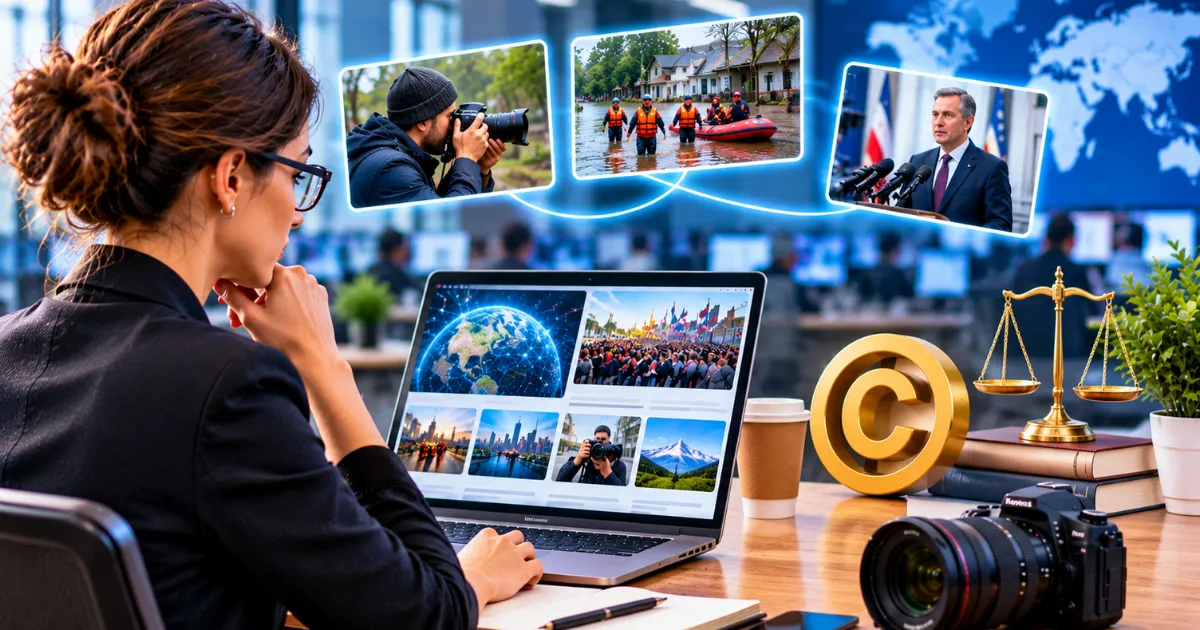
How to License News Footage Without Losing Your Rights
Licensing is one of the most important aspects of selling video content.
When you license footage, you generally give another organisation permission to use your recording under agreed conditions. This does not automatically mean that you have transferred ownership of the copyright.
Before accepting an offer, understand the following licensing arrangements.
Non-Exclusive Licensing
A non-exclusive licence allows you to grant usage rights to more than one organisation, subject to the agreement.
For example, you might license the same flood footage to a regional television channel and an international digital publisher.
The agreement should clearly specify permitted uses, territories, platforms, duration, and any restrictions.
Exclusive Licensing
An exclusive licence gives a particular organisation exclusive usage rights within the agreed scope and period.
You may not be able to license the same footage to competing publishers during that period.
Exclusive rights can be valuable to a newsroom, particularly when the footage is genuinely unique. Read the agreement carefully before accepting exclusivity.
Copyright Transfer or Assignment
An assignment is different from a licence. It can transfer copyright ownership or specified rights to another party, depending on the agreement and applicable law.
Do not sign an assignment when you only intend to provide temporary publication rights.
Check These Terms Before Signing
|
Licensing Term |
What You Should Understand |
|
Usage rights |
Where and how the video can be published |
|
Exclusivity |
Whether other organisations can license the footage |
|
Territory |
Countries or geographical markets covered |
|
Duration |
How long the organisation can use the recording |
|
Platforms |
Television, websites, social media, or other permitted channels |
|
Attribution |
Whether your name will appear as the footage source |
|
Editing rights |
What modifications the publisher can make |
|
Payment |
Agreed fee, payment conditions, and deadline |
|
Reuse |
Whether repeat broadcasts or future publications require additional permission |
Copyright laws differ between countries. In India, the Copyright Act, 1957 generally recognises the creator's copyright in original cinematographic works, subject to applicable ownership rules and agreements. Employment arrangements and commissioned work can affect ownership.
Always establish who owns the recording before licensing it. If you work for a production company, news organisation, or another journalist, check your contract rather than assuming that you personally own every recording.
How to Get Paid for Video Footage
Getting paid depends on more than the length of your video. A short recording of a major breaking event may be more valuable to a newsroom than several minutes of routine footage.
Payment arrangements vary between direct licensing agreements, commissioned assignments, and contributor networks.
Common payment structures include:
One-time licensing fee: A media organisation pays an agreed amount for specified usage rights.
Exclusive footage fee: An organisation pays for exclusive access to a recording under defined contractual conditions.
Commissioned video assignment: A publisher hires you to record a particular event or produce a specific report. Payment may be agreed before filming begins.
Repeat or extended licensing: Additional fees may apply when a publisher wants to reuse footage beyond the original agreement.
How Much Do News Stations Pay for Video Footage?
There is no universal industry rate for news footage. Payment depends on the organisation, event, location, exclusivity, demand, verification requirements, and the rights being licensed.
For example, an original recording of a major public incident may attract more editorial interest than ordinary footage of a routine community event.
The following factors commonly influence the amount offered:
- News value: Is the event important, unusual, or currently developing?
- Exclusivity: Can the footage be obtained from other sources?
- Timing: Was the video recorded close to the beginning of the event?
- Authenticity: Can the recording and its circumstances be verified?
- Technical quality: Is the footage clear and suitable for editorial use?
- Licensing scope: Does the buyer want limited usage or broader rights?
- Market demand: How many organisations need the footage?
Avoid agreeing to a price before understanding the licensing terms. A fee for one online publication should not automatically include unlimited television broadcasts, worldwide distribution, advertising use, and permanent rights.
Ask the buyer to confirm the payment amount, usage rights, exclusivity, and payment schedule in writing.
What Kind of Videos Do News Channels Buy?
News channels generally look for footage that contributes meaningful visual information to a story.
However, newsworthiness is not limited to dramatic incidents. A well-documented local development can be valuable when it affects a large community or provides evidence of an important public issue.
Examples include:
- Breaking incidents and their immediate aftermath.
- Natural disasters and emergency response.
- Political rallies, election activities, and public demonstrations.
- Public infrastructure developments and disruptions.
- Environmental damage and conservation efforts.
- Community issues involving public services.
- Significant sporting and cultural events.
- Interviews and eyewitness accounts relevant to current news.
Newsrooms also assess the credibility of the person submitting the recording.
According to the Associated Press's editorial principles, user-generated material must be assessed for accuracy, authenticity, and the right to use it. Its guidelines also emphasise protecting contributors from unnecessary risks.
This is why a credible contributor should provide the original recording, explain how it was obtained, and avoid making claims that cannot be supported.
How to Verify Your Footage Before Sending It
Verification is not an optional step when dealing with professional news organisations.
Editors need to establish that the recording shows the event it claims to show. Misidentified locations, misleading captions, old videos presented as new incidents, and manipulated recordings can create serious editorial problems.
You can make verification easier by following these practices:
Preserve original metadata: Keep the original file, including available recording information such as creation date, device details, and other embedded metadata. Metadata can be altered or incomplete, so it should support rather than replace verification.
Record accurate location information: Maintain the exact location where the video was captured. Additional details about visible landmarks can help editors independently check the scene.
Keep supporting evidence: Preserve original photographs, related recordings, witness contact details where appropriate, and notes about what you personally observed.
Disclose edits: Tell the editor if you have cropped, trimmed, stabilised, or otherwise modified a recording. Never present edited footage as an untouched original.
Avoid misleading captions: Describe only what you know. If you are uncertain about the cause of an incident, do not present speculation as a confirmed fact.
Disclose your relationship to the event: Explain whether you were an eyewitness, a journalist assigned to cover the event, or someone who received the footage from another person.
A newsroom may conduct additional checks, including reverse image searches, geolocation, source tracing, comparison with other recordings, and direct communication with the person who captured the footage.
Protect Your Safety, Privacy, and Legal Rights
The opportunity to earn money from news footage should never encourage you to take unnecessary risks.
Do not enter restricted areas, approach dangerous incidents, interfere with emergency services, or put yourself in harm's way to obtain a recording.
Responsible reporting also requires attention to the people shown in your footage.
Be particularly careful when recording:
- Children and vulnerable individuals.
- Medical emergencies and accident victims.
- Private property and restricted locations.
- Sensitive personal information.
- Individuals who may face threats or retaliation if identified.
Filming rules and privacy obligations differ across jurisdictions. Recording in a public place does not automatically resolve every privacy, defamation, or publication issue.
Music, television clips, background broadcasts, and other copyrighted material can also create clearance issues. Disclose any third-party material in your recording and do not claim ownership of material you did not create.
Never sell footage that belongs to another person without obtaining the necessary authority. A viral video found on social media is not automatically available for commercial licensing.
How to Become a Freelance News Videographer
Building a career in news videography takes more than purchasing an expensive camera. It requires reporting skills, editorial judgement, technical ability, reliable communication, and an understanding of media rights.
You can start with a smartphone and develop your equipment as your assignments grow.
Develop Basic Reporting Skills
Learn how to identify newsworthy developments, ask relevant questions, verify information, and distinguish confirmed facts from rumours.
Good news footage should help audiences understand what happened, not simply show something visually interesting.
Build a Video Portfolio
Create a collection of original recordings that demonstrates your ability to cover different subjects.
Include short reports, interviews, event coverage, community stories, and relevant documentary footage.
Each portfolio entry should explain the location, recording date, subject, and your role in producing the material. Do not include footage that you do not have permission to showcase.
Understand Video Journalism Ethics
Professional contributors must understand accuracy, transparency, fair representation, and responsible reporting.
Do not stage events, manipulate recordings, misrepresent eyewitness accounts, or remove important context to make a video more dramatic.
These practices protect your credibility and make editors more confident about working with you.
Build Relationships With Editors
Consistent communication matters. Follow submission guidelines, respond to verification questions, provide accurate information, and meet agreed deadlines.
A newsroom is more likely to consider future submissions from a contributor who has demonstrated reliability.
Create a Professional Contributor Profile
A professional profile should make it easy for editors to understand your skills, experience, location, and areas of coverage.
Include relevant work samples, reporting interests, contact details, and any specialist knowledge you can offer.
Platforms such as 5WH can help independent journalists establish a presence and connect with media organisations looking for reporting, photography, and video contributions.
Common Mistakes to Avoid When Selling News Footage
Even a potentially valuable recording can lose its editorial value if the contributor handles it incorrectly.
Watch out for these common mistakes:
Sending footage without context: Editors need to know when, where, and how the video was recorded.
Uploading only compressed social media versions: Preserve the original recording because compression can reduce quality and remove useful metadata.
Claiming exclusivity without checking: If you have already licensed or shared the recording, disclose the arrangement.
Ignoring copyright ownership: Never offer footage if you do not have the necessary rights.
Demanding payment before verification: Editors may need to establish authenticity and editorial relevance before discussing commercial terms.
Using misleading descriptions: An inaccurate caption can damage your credibility and expose a publisher to editorial and legal risks.
Accepting unclear agreements: Understand the rights being granted before handing over your original recording.
Taking unnecessary risks: No payment opportunity justifies endangering yourself or interfering with emergency operations.
Conclusion
Selling news videos to media outlets can become a meaningful opportunity for independent journalists and videographers, but success depends on much more than capturing a dramatic moment.
News organisations need original footage supported by accurate information, verifiable sources, clear ownership, and usable licensing terms. Contributors who understand these requirements are better positioned to build professional relationships and earn from their reporting.
Start by documenting events responsibly, maintaining original recordings, preparing professional submissions, and understanding the rights you are offering. Develop a portfolio that demonstrates your reporting ability rather than focusing only on camera quality.
If you are looking to expand your opportunities, 5WH provides a platform where independent contributors can connect with Freelance Journalists and organisations seeking original journalism, reporting, photography, and video content.
Building a reliable reputation takes time, but accurate reporting, responsible footage collection, and professional licensing practices can turn independent video journalism into a sustainable career.